














- ‹Home
- ‹
- /
- Jewellery & Watch Guides
- /
- Watch Complications Explained

- ‹Home
- ‹
- /
- Jewellery & Watch Guides
- /
- Watch Complications Explained
Watch Complications Explained: GMT, Chronograph, Moonphase & More
If you have ever looked at a watch and wondered what all those extra sub-dials, hands and displays actually do, you have encountered the world of watch complications.
From practical functions such as GMTs and chronographs to traditional complications such as moonphases, perpetual calendars and minute repeaters, complications are one of the most fascinating aspects of mechanical watchmaking.
But what exactly makes a watch a complication? How does a GMT differ from a world timer? What does a chronograph actually do? And is a tourbillon really a complication?
In this guide, we explain the most important watch complications, how they work, what they are used for and why they can make a watch considerably more complex and expensive.
Whether you are buying your first mechanical watch or already have a growing collection, understanding complications can help you appreciate what is happening beneath the dial.

What Is a Watch Complication?
In simple terms, a watch complication is a function that goes beyond simply displaying the hours, minutes and seconds.
The term is most associated with mechanical watches, where an additional function requires extra components and mechanisms within the movement.
A basic three-hand mechanical watch has a relatively straightforward job: keep time and display it.
Add a date display and the movement needs additional components to track the passing days. Add a chronograph, and you introduce an entirely separate timing mechanism. Add a perpetual calendar and the movement needs to understand different month lengths and leap years.
That is where the term complication comes from.
The more functions a movement performs, the more complex its architecture can become.
It is worth noting that watchmakers do not always agree on exactly what should count as a complication. Some functions, such as the tourbillon, are sometimes described more accurately as regulating devices rather than additional indications. For everyday purposes, however, the term is widely used to describe additional mechanical functions.

Are complications only found in mechanical watches?
No.
Quartz and electronic watches can have numerous additional functions, but the term has a particular significance in mechanical watchmaking because adding a function requires additional mechanical engineering.
This is part of what makes complicated mechanical watches so interesting. A modern digital watch can display a huge amount of information with relative ease. A mechanical watch has to accomplish the same task using gears, springs, levers, cams and other tiny components.
That mechanical approach is one of the reasons complications remain so important to traditional watchmaking.

GMT Watches
The GMT is one of the most useful complications for modern watch wearers.
GMT stands for Greenwich Mean Time and, in watchmaking, generally refers to a watch capable of displaying a second time zone.
A traditional GMT watch usually has an additional hand that makes one revolution every 24 hours rather than every 12 hours. Combined with a 24-hour scale, this allows the wearer to distinguish between morning and afternoon in the additional time zone.

How does a GMT watch work?
Imagine you live in London but are travelling to New York.
Your normal hour and minute hands can continue showing local time, while the GMT hand can remain set to your home time.
You can therefore glance at the watch and see both locations without doing the calculation in your head.
Some GMT watches use a fixed 24-hour scale. Others use a rotating 24-hour bezel, which can allow the wearer to track additional time zones.

Caller GMT vs Traveller GMT
You may encounter two terms when shopping for a GMT watch: caller GMT and traveller GMT.
The key difference is which hand can be adjusted independently.
With a caller GMT, the GMT hand is generally adjusted when setting the additional time zone.
A traveller GMT, sometimes called a true GMT, is designed with the local hour hand independently adjustable. This can be particularly convenient when travelling because you can change the local time without stopping the movement or disturbing the other indications.
This distinction is worth understanding if you intend to use your GMT as a genuine travel tool rather than simply appreciating the additional hand.

Who should buy a GMT?
A GMT can be particularly useful if you:
● Travel internationally
● Work with people in other countries
● Have family in another time zone
● Regularly communicate with overseas clients
● Simply like the look and functionality of a GMT
For many wearers, it is one of the most practical complications available.

Chronograph Watches
A chronograph is essentially a stopwatch built into a watch.
Unlike the normal seconds hand, which continuously displays the passing seconds, a chronograph can be started, stopped and reset to measure a period of elapsed time.

How does a chronograph work?
Most traditional chronographs have two pushers on the side of the case.
One typically starts and stops the chronograph, while the other resets it.
Many chronographs also have sub-dials that record elapsed minutes and hours.
The exact layout varies between watches, but the basic principle remains the same:
Press the start pusher.
The chronograph begins timing.
Press the stop pusher.
Read the elapsed time.
Press reset to return the chronograph to zero.
The chronograph therefore operates independently of the normal time display.

What are the sub-dials on a chronograph?
What are the sub-dials on a chronograph?
The small registers on a chronograph may display:
● Running seconds
● Elapsed minutes
● Elapsed hours
The arrangement depends on the movement and design.
You may also hear the terms bi-compax and tri-compax.
A bi-compax layout generally refers to a two-register chronograph, while a tri-compax layout generally has three registers.

What is a tachymeter?
A tachymeter is a scale, often printed around the edge of a chronograph dial or bezel, that can be used to calculate speed over a known distance.
For example, if you know that a measured distance is one kilometre, you can use the elapsed time shown by the chronograph and the tachymeter scale to estimate speed.
Tachymeters have a strong association with motorsport and racing chronographs, although their presence on modern watches is often as much about design heritage as everyday practicality.

What is a flyback chronograph?
A flyback chronograph allows the wearer to reset and immediately restart the chronograph with a single action.
A conventional chronograph normally needs to be stopped, reset and then restarted.
The flyback function was particularly useful when timing successive events, and remains an attractive feature for chronograph enthusiasts.

What is a split-seconds chronograph?
A split-seconds chronograph, also known as a rattrapante, has two chronograph seconds hands.
This allows the wearer to time two events that begin together but finish at different moments, or record an intermediate time while another event continues to be measured.
It is substantially more complicated than a conventional chronograph.

Moonphase Watches
A moonphase complication displays the current phase of the Moon as viewed from Earth.
It is one of the most recognisable traditional watch complications and is often incorporated into dress watches and more elaborate calendar watches.

How does a moonphase work?
A traditional mechanical moonphase uses a rotating disc depicting the Moon.
The disc moves gradually behind an aperture in the dial, creating the appearance of the Moon progressing through its phases.
The lunar cycle is approximately 29.53 days. Traditional mechanical moonphase mechanisms commonly approximate this with a 29.5-day cycle.
That tiny difference accumulates over time, meaning a conventional moonphase will eventually need correcting.
More sophisticated mechanisms can dramatically improve this accuracy.

Is a moonphase useful?
That depends on what you want from a watch.
Unlike a GMT or chronograph, most people do not need a moonphase complication in their daily lives.
Its appeal is instead connected to:
● Traditional watchmaking
● Astronomy
● Mechanical ingenuity
● Dial design
● Historical horology
For many collectors, that is precisely the point.
A moonphase connects a tiny mechanical mechanism on your wrist with the celestial cycle happening above it.

Date and Day-Date Complications
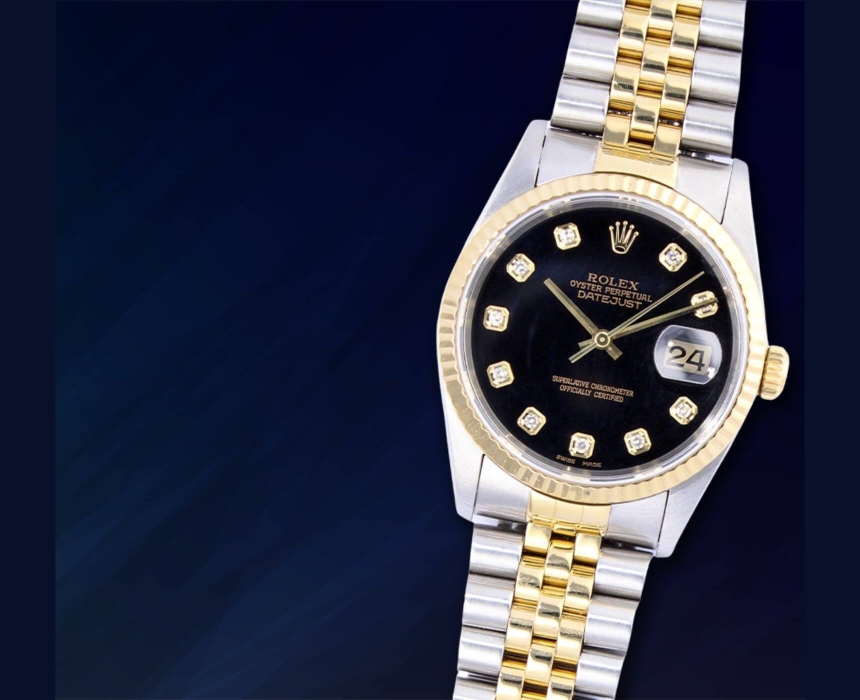
The humble date display is one of the most common complications in mechanical watches.
It may not have the visual drama of a tourbillon or minute repeater, but it is arguably much more useful.
A standard date mechanism generally displays the day of the month from 1 to 31.
The problem is that not every month has 31 days.
As a result, the wearer normally needs to make a manual correction after shorter months.
What is a day-date watch?
A day-date complication displays both:
● The day of the week
● The date
It is a straightforward extension of the traditional date complication and remains popular for everyday watches.

Annual Calendar Watches
An annual calendar takes the conventional date display considerably further.
Rather than simply displaying numbers from 1 to 31, an annual calendar can recognise the different lengths of the months.
It can distinguish between:
● 30-day months
● 31-day months
However, it does not normally account for February's varying length automatically.
As a result, an annual calendar generally needs to be corrected once a year.
That is where it differs from a perpetual calendar.

Perpetual Calendar Watches
The perpetual calendar is one of traditional watchmaking's great complications.
A perpetual calendar is designed to account automatically for the different lengths of months as well as leap years.
It can therefore keep track of the calendar without requiring regular manual correction, although the exact behaviour depends on the mechanism and calendar system.

What does a perpetual calendar display?
A perpetual calendar can display combinations of:
● Date
● Day
● Month
● Year
● Leap-year indication
Many also incorporate a moonphase display.
This makes the dial considerably more information-rich than a simple three-hand watch.

Annual calendar vs perpetual calendar
The easiest way to remember the difference is:
Annual calendar:
Handles the different lengths of most months but normally requires adjustment once a year.
Perpetual calendar:
Is designed to account for different month lengths and leap years automatically.
For anyone interested in mechanical watchmaking, the perpetual calendar is particularly fascinating because the movement effectively has to keep track of the irregular structure of our calendar.

Power Reserve
A power reserve indicator tells you how much energy remains stored in a mechanical watch's mainspring.
Mechanical watches store energy in wound mainspring. As the watch runs, that energy is gradually released through the movement.
A power reserve display gives you an indication of how much running time remains.
This can be particularly useful if you own several mechanical watches and rotate between them.
For example, if your watch has a power reserve of around 70 hours, you may be able to put it down for the weekend and pick it up again on Monday without it having stopped.
Without an indicator, you would simply discover whether it was still running when you picked it up.

World Time Watches
A world time watch is designed to display multiple time zones simultaneously.
This is different from a traditional GMT, which generally focuses on displaying an additional time zone.
World time watches commonly use a combination of:
● A city ring
● A 24-hour ring
● The main time display
The city ring represents different time zones around the world, allowing the wearer to see the current time in numerous locations at once.

GMT vs World Time
The simplest distinction is:
GMT:
Designed primarily to track an additional time zone.
World Time:
Designed to show many time zones simultaneously.
Neither is inherently better. They simply serve different purposes.
A frequent international traveller might appreciate a world timer, while someone who simply wants to keep track of home time while abroad may find a GMT more straightforward.

Dual-Time Watches
A dual-time watch displays two time zones.
It is closely related to a GMT, and the terminology can overlap depending on the manufacturer and movement.
The important thing is to look at how the watch displays and adjusts the second time zone, rather than relying solely on the name used in the product description.
This is a useful reminder when shopping for a watch: two watches can both advertise a second time zone while offering quite different ways of setting and reading it.

Alarm Watches
A mechanical alarm watch incorporates a mechanism that can sound at a predetermined time.
Unlike an electronic alarm, the sound is produced mechanically using components such as a hammer and gong or similar striking mechanisms.
Mechanical alarms are relatively uncommon compared with ordinary watches, which makes them particularly interesting to collectors.
An alarm complication can also demonstrate an important principle of watchmaking: complications are not necessarily created simply to display more information. Some introduce an entirely different mechanical action.
Tourbillon Watches
Few words in watchmaking generate as much curiosity as tourbillon.
The tourbillon was developed as a way of reducing the effects of gravity on the regulating mechanism of a mechanical watch.
In a traditional tourbillon, the escapement and balance are mounted within a rotating cage.
The cage rotates, traditionally completing a revolution in around a minute in many designs.
What does a tourbillon do?
Historically, the idea was to reduce positional errors caused by gravity by continuously changing the orientation of the regulating mechanism.
Modern watchmaking has developed considerably since the tourbillon was invented, and its practical importance for everyday accuracy is much less straightforward than its reputation might suggest.
Today, the tourbillon is often appreciated as a demonstration of mechanical skill and craftsmanship.
There is also a technical debate over whether a tourbillon should technically be called a complication because it does not necessarily provide an additional indication.
That debate is unlikely to disappear any time soon.
For the purposes of a guide like this, it is useful to understand both descriptions: the tourbillon is commonly grouped alongside high-end complications, while technically it can be considered a regulating device.
Minute Repeaters
A minute repeater is one of the most traditional and technically demanding watch complications.
Instead of displaying the time visually, it can sound the time on demand.
Activate the mechanism and the watch strikes a sequence of sounds representing the hours, quarters and minutes.
For example, a particular sequence of chimes can communicate the time without requiring the wearer to look at the dial.
Why are minute repeaters so difficult?
Why are minute repeaters so difficult?
The mechanism has to coordinate:
● Hammers
● Gongs
● Racks
● Snails
● Levers
● The time display
● The striking sequence
Everything must happen in the correct order and at the correct moment.
The quality of the sound is also enormously important.
This is one reason minute repeaters occupy such a prestigious position in traditional watchmaking.
Unlike a GMT, there is little practical reason for most people to own one today.
But practical usefulness is not really the point.
A minute repeater demonstrates what can be achieved when mechanical engineering is taken to an extraordinary level.
Grande Sonnerie and Petite Sonnerie
If a minute repeater sounds at the time when you ask it to, a sonnerie can go further.
A grande sonnerie can automatically strike the hours and quarters as time passes, depending on the particular mechanism.
A petite sonnerie generally performs a more limited striking sequence.
These mechanisms can be combined with a minute repeater, creating extraordinarily complex watches.

Equation of Time
The equation of time is an astronomical complication.
The time shown by an ordinary watch is based on mean solar time, which divides the day into regular 24-hour periods.
True solar time, based on the actual position of the Sun, does not always correspond exactly to that mean time.
The difference between the two is known as the equation of time.
An equation-of-time watch can display that difference, often using a dedicated hand or scale.
It is an excellent example of a complication that is fascinating from a horological and astronomical perspective, even if few people need it for everyday timekeeping.
Deadbeat Seconds
A deadbeat second’s mechanism makes the seconds hand jump once per second rather than sweep continuously.
This gives a mechanical watch a second’s display that visually resembles the ticking action of a quartz watch.
It is sometimes called a dead seconds or true seconds complication.
The mechanism is an example of how watchmakers can manipulate the movement's normal operation to produce a particular visual effect.
Jumping Hours
Most analogue watches display the hour using a hand that gradually moves around the dial.
A jumping-hours watch does things differently.
Instead of an hour hand, a numerical display can instantly change from one hour to the next.
This can be achieved using a disc or aperture and a mechanism designed to advance it precisely at the correct moment.
Jumping hours are particularly interesting because they demonstrate that a complication does not necessarily have to add more information. It can also change how existing information is displayed.
Retrograde Displays
A retrograde display uses a hand that travels across part of a scale before rapidly returning to its starting position.
For example, a retrograde seconds hand might travel from zero to 60 and then jump back to zero.
Retrograde displays can be used for:
● Seconds
● Minutes
● Dates
● Days
● Power reserve
● Other indications
They are visually striking and can make a watch feel much more animated than a conventional analogue display.
Pulsometer and Telemeter Scales
You may occasionally see additional scales around the dial of a chronograph.
Two examples are the pulsometer and telemeter.
Pulsometer
A pulsometer can be used to estimate a person's heart rate by timing a specified number of heartbeats.
These scales have historical connections with medical watches.
Telemeter
A telemeter can be used to estimate the distance to an event that produces both a visible and audible signal.
The classic example is calculating the approximate distance of a storm by measuring the delay between seeing lightning and hearing thunder.
These scales are less important as everyday tools today, but they provide an interesting insight into the historical uses of chronograph watches.
Foudroyante and High-Frequency Timing
Some of the more specialised chronograph mechanisms go far beyond ordinary elapsed-time measurement.
A foudroyante display can divide a second into smaller fractions, providing an extremely precise visual indication of elapsed time.
Such mechanisms are largely of interest to enthusiasts and collectors rather than everyday users.
They demonstrate an important theme running throughout complicated watchmaking: the challenge is often not simply to perform a useful task, but to perform it mechanically, reliably and beautifully within a tiny space.
What Is a Grand Complication?
The term grand complication is used to describe watches combining multiple sophisticated complications.
Traditionally, the term has often been associated with three broad families:
● Calendar complications
● Timing complications
● Striking complications
A watch might therefore combine a perpetual calendar, split-seconds chronograph and minute repeater, for example.
However, there is no single universal checklist defining exactly how many or which complications a watch must have to qualify as a grand complication.
The term is best understood as describing the upper end of complicated mechanical watchmaking.

What Makes a Complicated Watch More Expensive?
Adding a complication does not simply mean adding another feature to the dial.
A mechanical complication can require:
● Additional components
● More complex movement architecture
● Greater assembly time
● Specialist watchmaking skills
● Additional adjustment and regulation
● More demanding finishing
● More complicated servicing
The difficulty increases when several complications have to work together.
For example, a perpetual calendar and chronograph cannot simply occupy the same space independently. They have to coexist within the movement and interact correctly with the basic timekeeping mechanism.
This is one reason complicated watches can cost considerably more than otherwise similar watches with simpler movements.
However, more complications does not automatically mean a better watch.
A simple three-hand mechanical watch can demonstrate exceptional engineering, finishing and design. Complexity is one aspect of watchmaking, not a universal measure of quality.
Which Watch Complication Is Right for You?
The most useful complication depends on what you actually want from your watch.
If you travel frequently
Consider:
● GMT
● Dual time
● World time
If you like timing things
Consider:
● Chronograph
● Flyback chronograph
● Split-seconds chronograph
If you want everyday practicality
Consider:
● Date
● Day-date
● Power reserve
Which Watch Complication Is Right for You?
If you enjoy traditional watchmaking
Consider:
● Moonphase
● Annual calendar
● Perpetual calendar
● Alarm
● Repeater
If you are fascinated by mechanical engineering
Consider:
● Tourbillon
● Split-seconds chronograph
● Minute repeater
● Grande sonnerie
● Other high complications
The important question is not simply “Which complication is the best?”
It is:
Which complication will make you enjoy wearing the watch more?
Practical Complications vs Horological Complications
One useful way to understand complications is to divide them loosely into two groups.
Practical complications
These provide information or functionality that many people can genuinely use.
Examples include:
● Date
● GMT
● World time
● Chronograph
● Power reserve
● Alarm
Horological complications
These may be less necessary in daily life but demonstrate mechanical sophistication.
Examples include:
● Tourbillon
● Minute repeater
● Perpetual calendar
● Equation of time
● Grande sonnerie
● Astronomical displays
There is no right answer as to which category matters more.
Some people want their watch to be a practical tool. Others want to wear a tiny mechanical machine that represents centuries of watchmaking tradition.
For many enthusiasts, it is the combination of the two that makes complicated watches so appealing.

Are Watch Complications Worth It?
That depends entirely on what you want from your watch.
If you travel regularly, a GMT can provide a genuinely useful second time zone.
If you time events, a chronograph has an obvious purpose.
If you rotate several watches, a power reserve indicator can be convenient.
But a moonphase, tourbillon or minute repeater may be appealing for completely different reasons.
The value can come from:
● Mechanical ingenuity
● Craftsmanship
● History
● Design
● Collectability
● Personal interest
A complication does not have to solve a daily problem to be worthwhile.
Mechanical watches themselves are rarely the most efficient way to tell the time. Their appeal comes from the combination of engineering, craftsmanship, history and human ingenuity.
Complications take that idea further.

Frequently Asked Questions About Watch Complications
What is the most common watch complication?
The date is among the most common complications found on mechanical watches. It provides additional information without dramatically increasing the complexity of the watch.
What is the most useful watch complication?
That depends on the wearer. A GMT can be useful for travellers, a chronograph for timing events and a power reserve indicator for people who rotate between several mechanical watches.
Is a date display a complication?
Yes. In traditional watchmaking terminology, a date display is generally considered a complication because it adds a function beyond basic timekeeping.
What is the difference between a GMT and a world timer?
A GMT generally focuses on displaying an additional time zone, whereas a world timer is designed to show multiple time zones simultaneously.
What is the difference between a chronograph and a stopwatch?
A chronograph is a stopwatch function integrated into a wristwatch. A standalone stopwatch is a separate timing instrument.
How does a moonphase watch work?
A traditional mechanical moonphase uses a rotating disc that depicts the Moon's changing appearance throughout its lunar cycle.
How accurate is a moonphase watch?
Accuracy depends on the mechanism. Traditional moonphase mechanisms approximate the lunar cycle and eventually require adjustment, while more sophisticated designs can remain accurate for much longer periods.
What is an annual calendar?
An annual calendar automatically accounts for months with different numbers of days but normally requires adjustment once a year.
What is a perpetual calendar?
A perpetual calendar is designed to account for different month lengths and leap years automatically.
Is a tourbillon a complication?
It is commonly grouped with watch complications, although technically some watchmakers consider it a regulating device because it does not necessarily provide an additional indication.
Why are complicated watches expensive?
Complications can require additional components, specialist skills, more complex assembly, greater adjustment and more demanding servicing and finishing.
Do more complications make a watch better?
Not necessarily. Complexity is one aspect of watchmaking. The quality of a watch also depends on its movement, finishing, reliability, design, materials and how well it suits the wearer.
Final Thoughts
Watch complications are ultimately about much more than adding extra information to a dial.
A GMT turns a mechanical watch into a tool for tracking another part of the world. A chronograph transforms it into a stopwatch. A perpetual calendar attempts to mechanically understand the irregular structure of our calendar. A moonphase connects the watch to the lunar cycle, while a minute repeater can turn the passage of time into sound.
And then there are complications such as the tourbillon, where the attraction lies as much in the mechanical construction and craftsmanship as in any practical benefit.
That is what makes complications so fascinating.
They show just how much can be achieved with a collection of gears, springs, wheels and levers small enough to fit inside a watch case.
Whether you are looking for a practical GMT for travelling, a chronograph with motorsport heritage, a moonphase for its traditional character or a highly complicated watch simply because you appreciate mechanical watchmaking, understanding complications makes it easier to appreciate what is happening beneath the dial.
Available Watches
